

How to think about plot investment in Lahore.
This is a plain guide — not a sales pitch. It explains how plot buying generally works in Lahore, what can affect a plot's value and what to check before you commit.
Property can rise in value, but it can also fall. Read the information, ask questions, verify important claims and make a decision that fits your own circumstances.

Why people consider plots in Lahore.
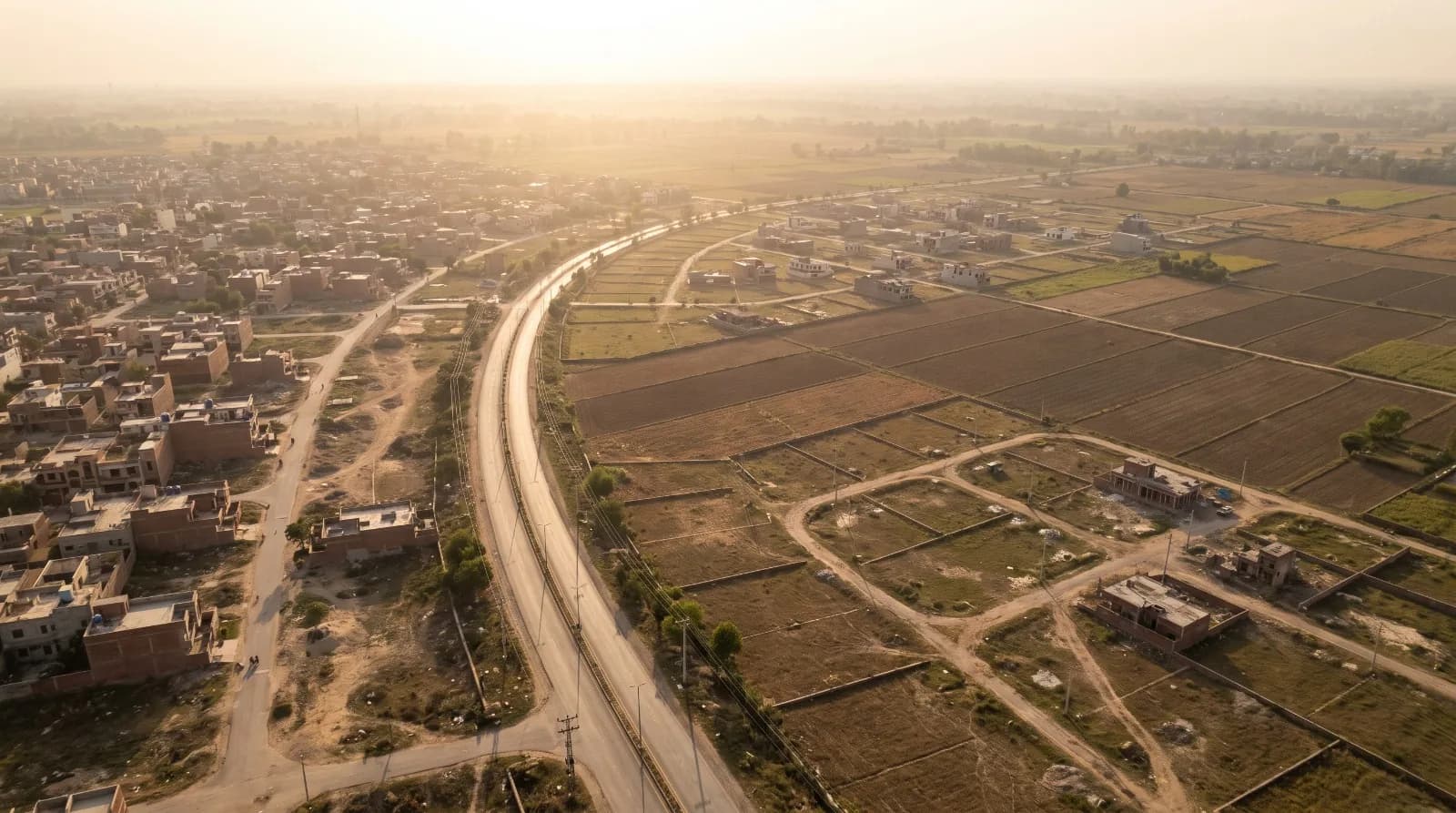
Lahore keeps expanding outward. As roads and services reach new areas, land that was agricultural or undeveloped can become part of the city's residential and commercial map.
Plots draw buyers because the initial commitment is often lower than a completed house, there is nothing to maintain while the land is held, and the option to build later stays open. None of this guarantees a return — location, access, documents, on-ground activity and holding period all matter.
What actually affects a plot's worth.
A plot's value is not random, but it is never guaranteed. Several practical factors usually matter more than marketing language.
Location and access
Consider the plot's connection to main roads, employment areas and everyday services. Better access can make a location easier to use, but access claims should still be checked in person.
Visible development
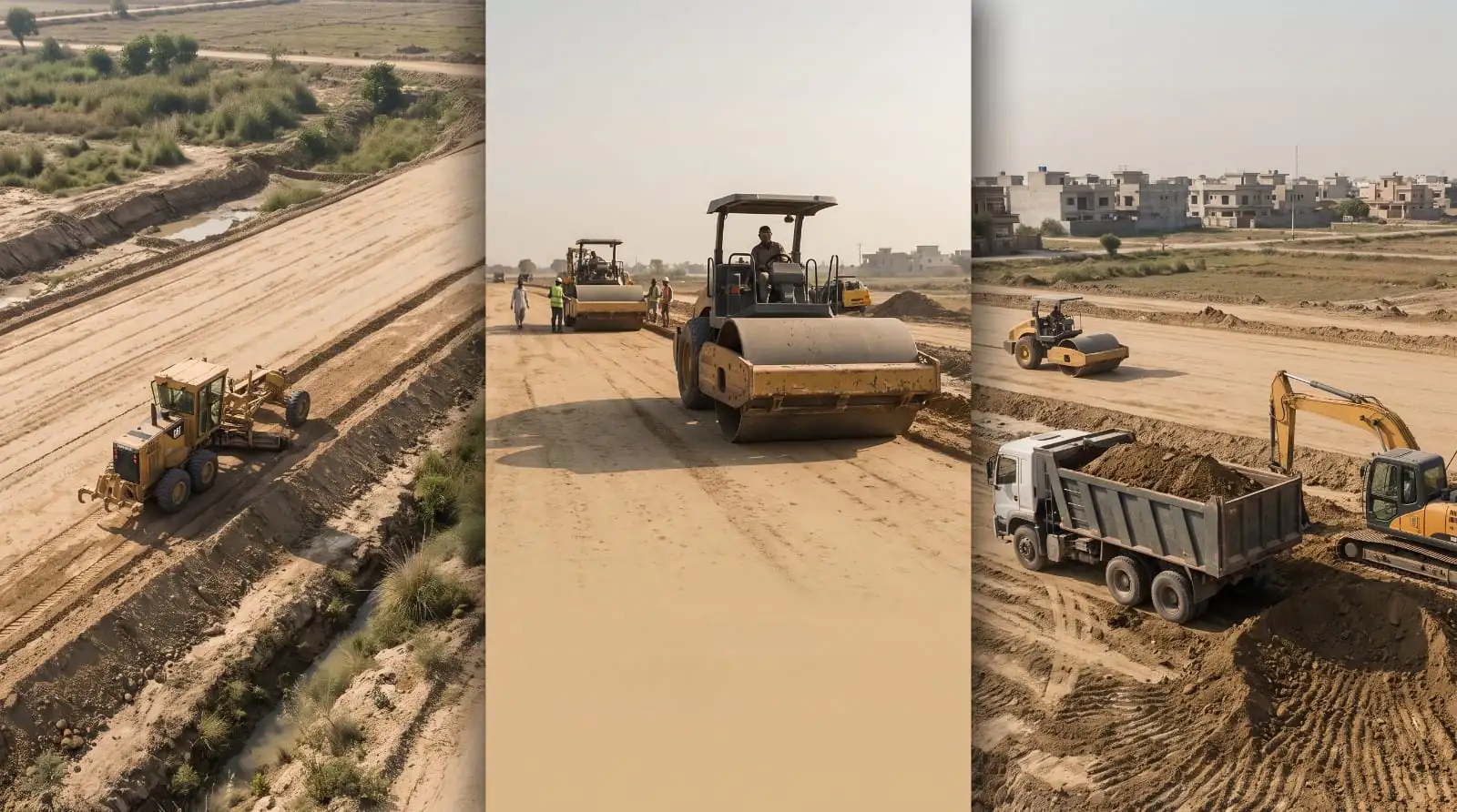
Road formation, utilities and construction activity can show that work is taking place. Dated on-ground evidence is more useful than undated promises.
Project documents
Review the documents relating to the project and the specific plot. Ask which authority or party issued each document, and verify important information independently.
Timing and holding period
Buying earlier can cost less but may involve more uncertainty. Buying later may cost more after visible progress. Neither approach guarantees a return.
How instalment buying generally works.
Some plots are offered through an instalment plan instead of requiring the full price at once. The buyer normally pays an initial booking amount, followed by scheduled payments over an agreed period.
An instalment plan can make the initial commitment more manageable, but it also creates future payment obligations. Before booking, review the complete written schedule and consider whether the payments remain affordable for the full duration.
Booking and initial payment
The buyer pays an initial amount to begin the booking process. Ask for a written receipt and confirmation of what the payment reserves.
Scheduled instalments
Payments are made according to the written schedule. The plan may include monthly, quarterly, half-yearly or annual amounts.
Possession and transfer process
After the agreed requirements are met, ask for the written process, remaining charges, possession conditions and transfer documentation.
Handover and possession
Once the transfer is complete, ownership is formally handed over and physical possession of the plot is taken.
Booking and initial payment
Get a signed receipt naming the plot, the amount, and what the booking secures — a specific plot number, a category, or a place in a queue.
Scheduled instalments
Keep every dated receipt. Ask up front about late-payment terms and how the schedule can change if development is delayed.
Possession and transfer process
Confirm remaining charges (development, transfer, corner or park-facing), the exact list of documents required, and who signs at each stage.
Handover and possession
Verify the boundary on-site against the plan, keep the final allotment file, and record possession in writing with the developer.
Booking and initial payment
Get a signed receipt naming the plot, the amount, and what the booking secures — a specific plot number, a category, or a place in a queue.
Scheduled instalments
Keep every dated receipt. Ask up front about late-payment terms and how the schedule can change if development is delayed.
Possession and transfer process
Confirm remaining charges (development, transfer, corner or park-facing), the exact list of documents required, and who signs at each stage.
Handover and possession
Verify the boundary on-site against the plan, keep the final allotment file, and record possession in writing with the developer.
Before accepting an instalment plan, ask for:
- Total plot price
- Booking amount
- Allocation or confirmation amount
- Number and frequency of instalments
- Annual or half-yearly payments
- Possession amount
- Development charges
- Corner, park-facing or boulevard charges
- Transfer charges
- Late-payment terms
- Payment-plan effective date
- Expiry or revision conditions
- Refund or cancellation terms
- Written receipts for every payment
Check these before you commit.
Good decisions begin with questions, written information and independent verification.
See the documents
Ask to review the available project documents and the information connected to the specific plot. Do not rely only on a verbal assurance.
Verify important claims
Confirm important project, ownership and location information through suitable independent sources before making a payment.
Commit only what you can hold
Property is not quick cash. Consider whether you can continue holding the plot and meeting future payments if plans or market conditions change.
Get the terms in writing
Prices, instalments, additional charges, transfer conditions and deadlines should be written, dated and acknowledged — not only discussed.
Have a question about a specific plot?
We would rather answer a clear question than send a generic sales message. Ask about a plot, the supplied documents, the latest payment information or arranging a site visit, and we will tell you what we can confirm.